
Project Description
Study Menjaga: A Cluster Randomised Control Trial of Continuous Quality Improvement to Improve Antenatal HIV, Syphilis and Hepatitis B Detection and Treatment in Indonesia
Menjaga Study: Strengthening Antenatal Services to Achieve Triple Elimination in Indonesia
HIV, syphilis, and hepatitis B infections in pregnant women remain a serious public health challenge in Indonesia. All three diseases can be transmitted from mother to child, yet such transmission is preventable through early testing and timely treatment.
Antenatal testing coverage in Indonesia, however, remains significantly below the desired level. In 2023, only approximately two thirds of pregnant women underwent HIV and hepatitis B testing, and less than 40% were tested for syphilis.
Inequities in access to services, unstable logistics, low demand for testing, and complex recording systems result in many pregnant women missing these important screening opportunities.
The MENJAGA Study was designed to address this situation through an approach combining scientific rigor and health system strengthening to transform the delivery of antenatal care.
The study name is derived from the word “care” from “antenatal care” (ANC), and aims to contribute to achieving triple elimination in Indonesia.
The study was conducted by the Center for Tropical Medicine (CTM) UGM in collaboration with Universitas Sebelas Maret, the London School of Hygiene and Tropical Medicine, and the University of New South Wales, using a cluster randomised controlled trial design employing the Continuous Quality Improvement (CQI) approach.
This approach ensures that solutions developed are not merely external technical interventions but emerge from internal analysis processes, led directly by primary health centers (puskesmas), and adapted to the context of each area.
With funding from the Medical Research Council (UK), the MENJAGA Study addresses the question of how a health system can improve itself using existing resources.
Improving Services from Within: CQI Applied in Puskesmas
From the outset, MENJAGA was designed not only to increase testing coverage figures but to build a new culture within antenatal services — one emphasizing root cause analysis, daily use of data, and consistent incremental improvement.
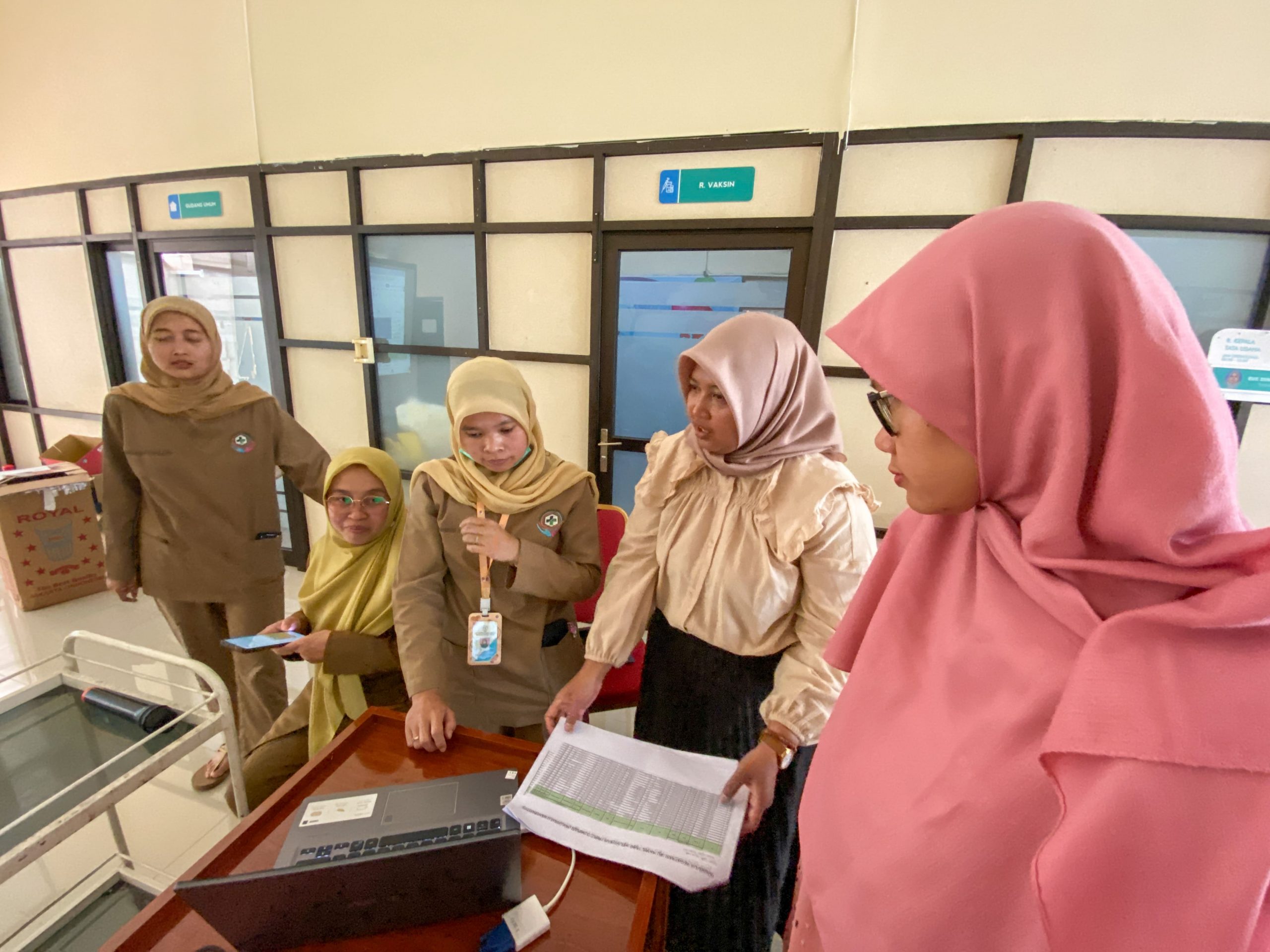
In Bandung and Bogor, 22 intervention puskesmas applied Plan–Do–Study–Act (PDSA) cycles to map barriers at their facilities: from uneven distribution of reagent supplies and unclear referral pathways, to low test demand from pregnant women, and recording systems that made data difficult to track.
Through this process, puskesmas found that small changes could trigger significant impact. In Rumpin, Bogor Regency, the village-level innovation “BUMIL P3DE – Pregnant Women Tested for 3 at the Village” increased first-trimester testing coverage from 50% to 126.8% within months.
In Bandung, a network with private midwives was systematically established, so that triple elimination examinations previously fragmented across providers are now recorded, monitored, and mutually supportive.
From the Field: Collaboration as a Core Strength
One strength of MENJAGA lies in the relationships built with health workers. In Bogor, geographical challenges and access limitations initially raised doubts about whether change could occur quickly.
However, monitoring visits from the health office and the Indonesian Midwives Association (IBI) generated new motivation: puskesmas staff felt they were not working alone.
“Discussing with several puskesmas was very eye-opening. We learned that the challenges in each area are different, and from those differences, innovations emerge that are suited to field conditions.”
Health worker from Puskesmas Ciomas
The outcomes that followed were not only improved testing figures but a shift in mindset — that service improvement can emerge from collective strength.
In Bandung, the biggest challenge arose from inconsistent recording and reporting. With the CQI approach, health workers began to see data not as an administrative burden but as a tool for understanding risk and ensuring every pregnant woman received timely testing.
“The impact of CQI training on recording and reporting has been tremendous. We felt guided and reminded again of the importance of timeliness.”
Health worker from Puskesmas Ciomas
Collaboration with private midwives, cross-puskesmas learning forums, and the formation of cross-programme teams reinforced this improvement process from multiple directions.
Outcomes and Outlook
The MENJAGA Study demonstrates that improving antenatal services does not necessarily depend on short-term projects or large additional resources.
When puskesmas are given space to analyze their own problems, lead change, and receive support from a cross-sector network, improvements in service quality can occur more quickly and sustainably.
Achievements ranging from increased testing coverage to the establishment of formal MoUs with private midwives confirm that health workers have considerable capacity to strengthen services when provided with the right tools and space.
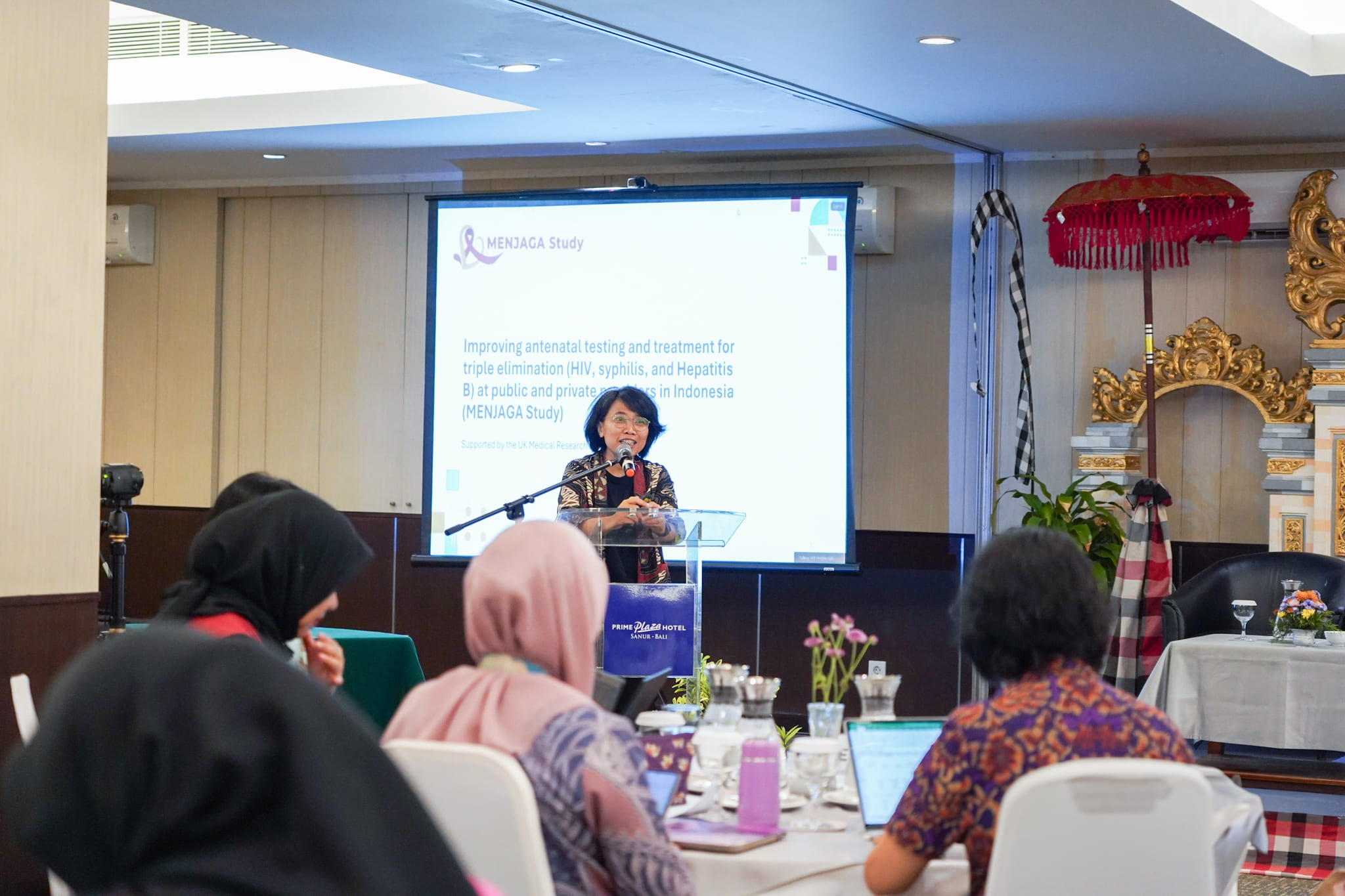
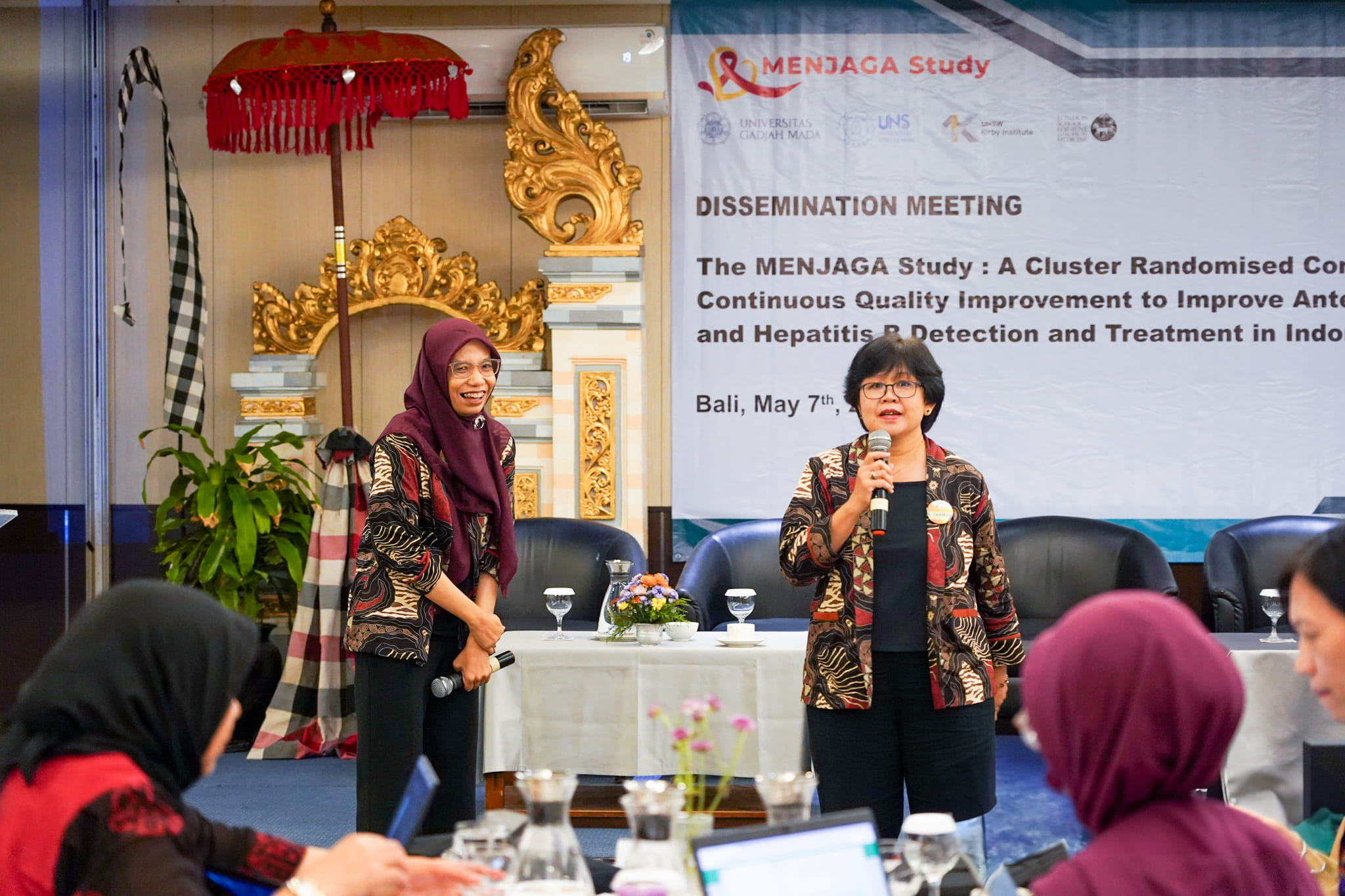
The national dissemination of study findings in May 2025 marked an important milestone. Researchers hope that MENJAGA’s findings will serve not only as a research report but as the basis for national programme improvement.
With a spirit of collaboration, a data-driven approach, and the commitment of puskesmas to continuously improve systems from within, the MENJAGA Study offers new hope for achieving triple elimination in Indonesia — a significant step towards stronger, more inclusive, and sustainable maternal and child health services.
Donor

Collaborators
Duration
2019-2025
Principal Investigator
Ari Natalia Probandari
The Project Team


Other researcher:
- dr. Vitri Widyaningsih, M.S., Ph.D.
- dr. Yusuf Ari Mashuri, M.Sc.
- Juniati Rahmadani, S.Si., MPH.
- Eka Putri Puspita