Project Description
Artificial Intelligence for Pandemic, Epidemic, Preparedness & Response (AI4PEP)
Overview
Within this initiative, the Center for Tropical Medicine, Universitas Gadjah Mada is developing an ethically grounded, AI-enabled digital platform for infectious disease surveillance, outbreak prediction, and decision support in Indonesia.
The project responds to a clear need: existing surveillance platforms such as Indonesia’s Early Warning Alert and Response System (EWARS) provide an essential foundation, but early warning can be strengthened by better integrating routine surveillance, healthcare, and environmental data.
At the same time, applying AI to public health surveillance raises ethical, legal, and governance questions that demand context-sensitive guidance.
AI4PEP-Indonesia addresses both challenges together—building the technology and the ethical framework to govern it in parallel, from the outset.
What We Are Building
We are developing an AI-enabled decision-support layer that complements, rather than replaces, existing surveillance workflows.
It integrates routine surveillance data with contextual data—including healthcare utilization, environmental, and meteorological signals—to support earlier detection of outbreaks and clearer interpretation of disease trends.
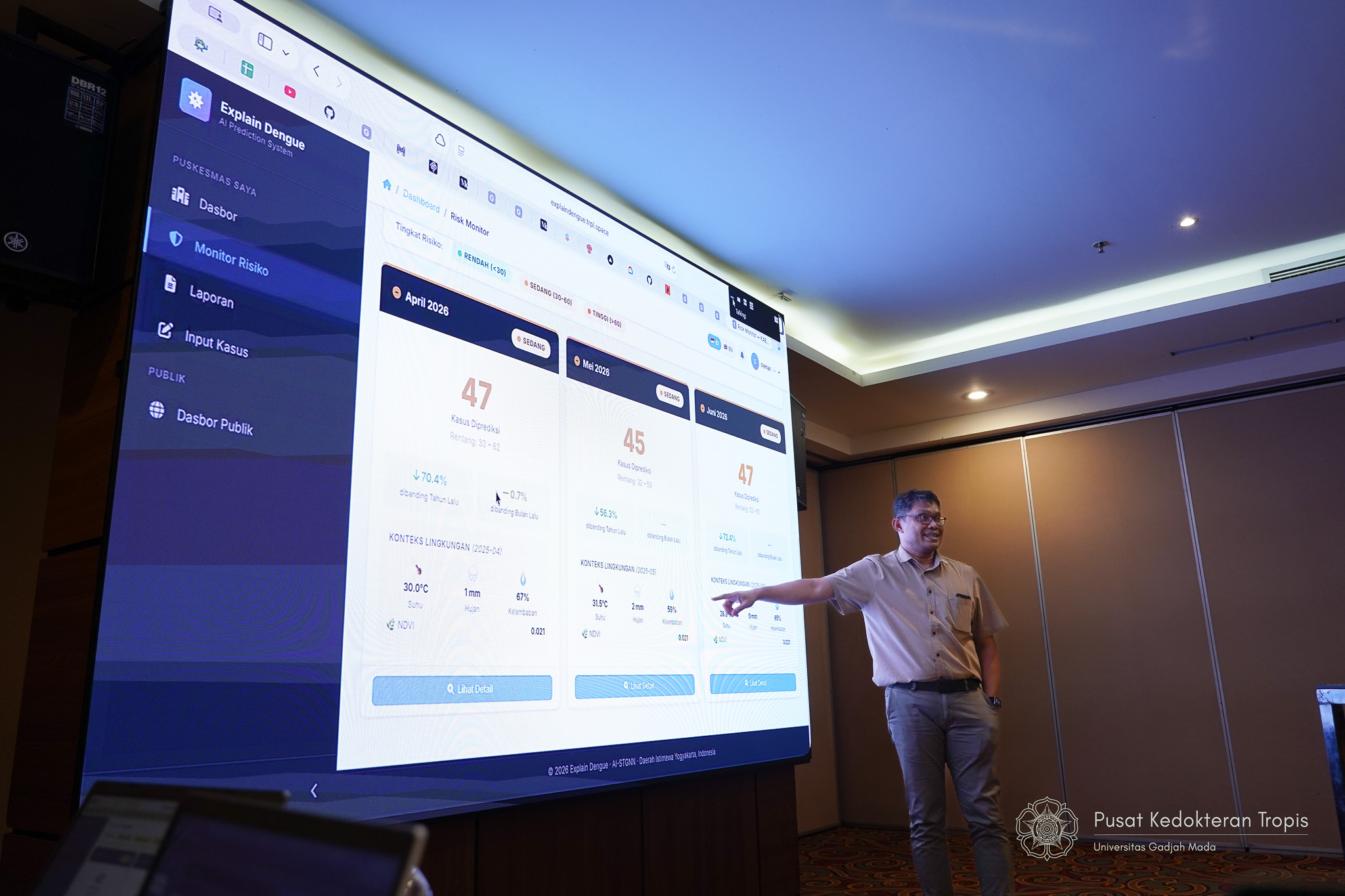
The resulting information is delivered to decision-makers through a user-centered digital dashboard.
Objectives
Identify Surveillance Needs
Identify priority surveillance gaps, use cases, stakeholder needs, and data sources for AI-enabled surveillance in Indonesia.
Develop Predictive Models
Develop and validate AI-based models for forecasting cases and outbreak risks for selected priority diseases.
Design a Digital Dashboard
Design and pilot a user-centered digital dashboard that communicates model outputs to public health stakeholders.
Strengthen Responsible Governance
Identify ethical, legal, social, and governance issues in the use of AI for surveillance and response.
Activities and Stakeholder Engagement
The AI4PEP-Indonesia project is developed through collaboration with public health institutions, district health offices, healthcare facilities, researchers, technical experts, and other relevant stakeholders.
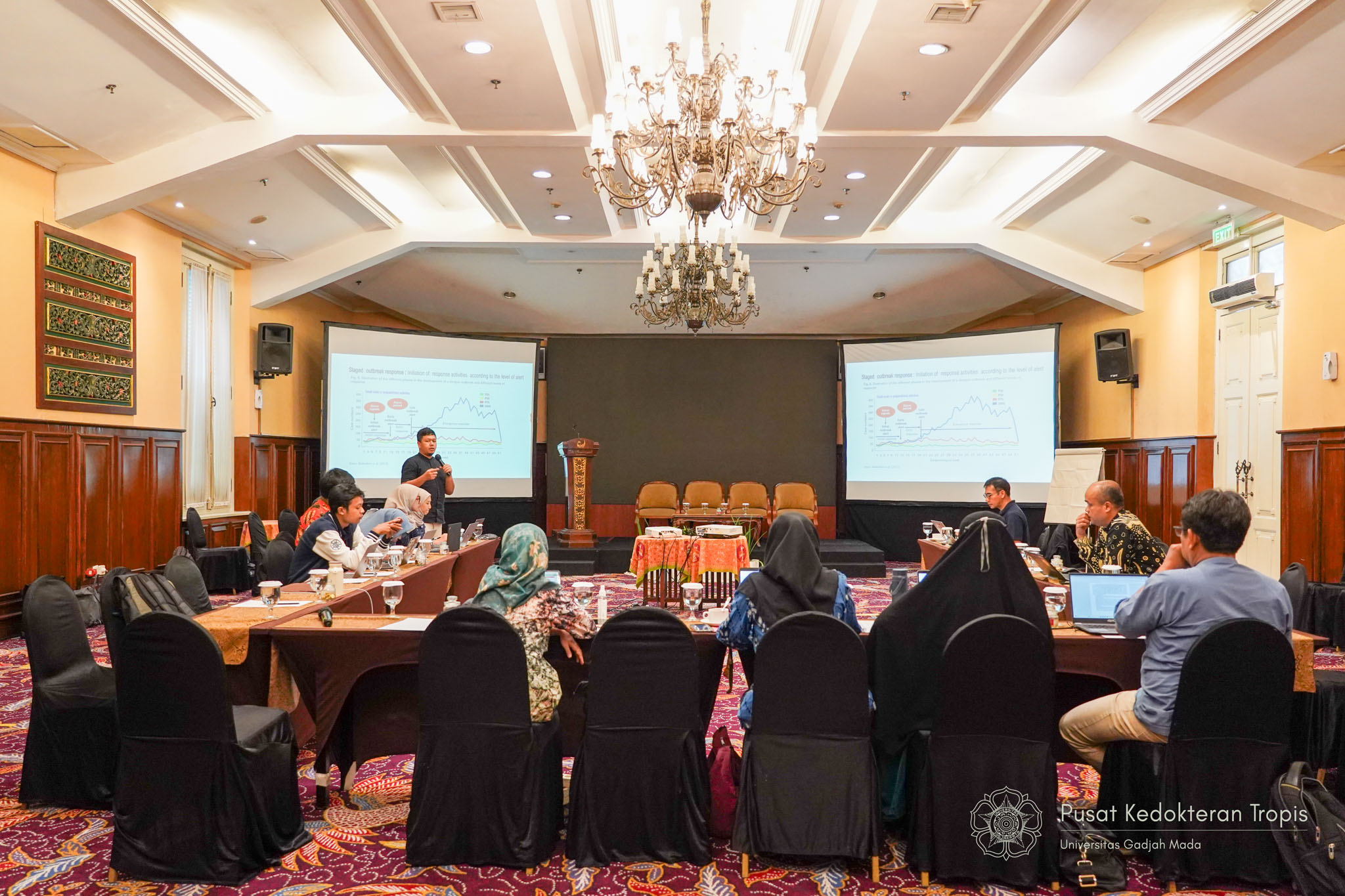
Workshops, platform trials, consultations, and technical discussions are conducted to ensure that the technology and ethical framework respond to real-world public health needs.
Integrated Technology and Governance
AI4PEP-Indonesia is developing three interconnected outputs to enhance outbreak forecasting, syndromic surveillance, and responsible AI implementation in Indonesia.
AI-Enabled Platform for Dengue Forecasting Using Climate Predictors
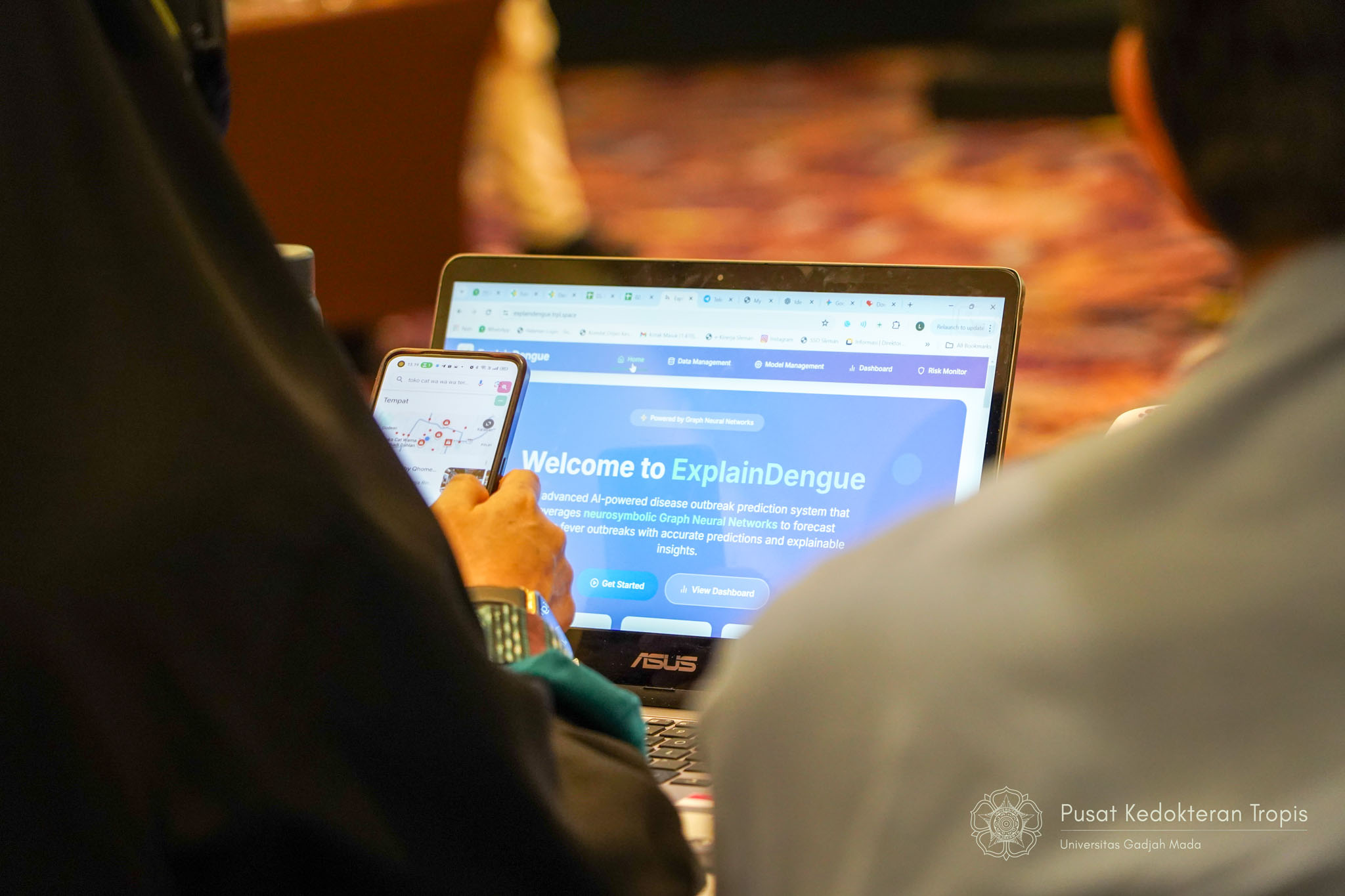
In response to rising global dengue cases in May 2024, the ExplainDengue platform was built to anticipate outbreaks by leveraging the climate-sensitive nature of the disease.
While routine surveillance often catches outbreaks late, this system uses a graph neural network to forecast emerging risks.
It integrates dengue case data from Indonesia’s EWARS/SKDR system for Yogyakarta with location details, time-series data, climate variables from OpenWeather and NASA POWER, and a satellite-derived NASA vegetation index.
ExplainDengue is designed to complement existing workflows rather than replace them.
ExplainDengue connects human, environmental, and climate data for various levels of health offices. Future plans include adding syndromic-surveillance signals from healthcare facility records.
In 2025, the AI4PEP team held a workshop with district health offices in Sleman and Gunungkidul to trial the platform and establish locally grounded alert thresholds.
By utilizing case data, outbreak reports, and SKDR alert histories, the team and local stakeholders mapped out when surveillance signals should trigger public health action.
Moving forward, the team is refining the platform with local partners to expand it into a validated early-warning system across Yogyakarta, modeling responsible AI-enabled surveillance for Indonesia.
Use of Large Language Models to Support Syndromic Surveillance in Healthcare Facilities
Indonesia’s routine surveillance system, EWARS/SKDR, relies on structured and disease-specific reports.
This creates two significant blind spots: detailed clinical data remains hidden in unstructured free-text notes, and the system lacks the agility to detect novel or unexpected syndromes that are essential for pandemic preparedness.
Additionally, manual reporting places a significant burden on frontline health workers.
We are building a system that uses large language models and natural language processing to evaluate unstructured data from Puskesmas, laboratories, and hospitals.
By interpreting symptom patterns expressed through local terms and abbreviations before a diagnosis is finalized, the system groups them into syndromic categories such as acute febrile, respiratory, and gastrointestinal syndromes.
These categories can then be analyzed to identify unusual spatial and temporal clustering.
By evaluating symptoms instead of waiting for confirmed diagnoses, this approach can flag emerging health threats before their pathogens have been identified.
The system also reduces health workers’ reporting burdens by extracting relevant information from existing records without requiring additional reporting forms.
This tool complements EWARS/SKDR and integrates with ExplainDengue. Within the AI4PEP framework, facility-level syndromic signals are merged with predictive analytics.
This provides public health teams with both a forecast of known disease risks and a broad, symptom-based lookout for unexpected health threats.
Created within AI4PEP’s ethics and governance stream, the system incorporates strong privacy safeguards, alignment with national governance, and strict human oversight.
The AI identifies and explains candidate signals, while public health personnel remain responsible for interpretation and decision-making, embedding transparency, fairness, and accountability.
As the system matures, AI4PEP aims to demonstrate how responsible and explainable AI can enhance frontline surveillance—helping Indonesian health offices detect outbreaks earlier, respond faster, and prepare for previously unseen diseases.
Ethical Implementation Guidelines for Artificial Intelligence in Infectious Disease Surveillance
AI-driven outbreak detection requires public trust because it relies on sensitive data and may significantly affect individuals and communities.
Consequently, AI4PEP integrates ethics and governance from the start by developing consensus-based ethical guidelines for the responsible use of AI in Indonesian infectious disease surveillance.
AI surveillance raises crucial questions concerning data protection, equity, model transparency, and accountability in high-stakes decision-making.
To maintain public trust, global standards must be adapted so that they are meaningful, applicable, and feasible within the Indonesian context.
AI4PEP’s ethical initiatives run parallel to technical progress. Rather than serving only as a final report, the guideline functions as an active design and governance framework.
It establishes upfront requirements for privacy, access control, transparency, alert proportionality, equity, and human oversight.
Desk Review
Synthesizes international guidelines, national policies, and literature to identify core values, risks, and foundational safeguards.
Working-Group Drafting
A multidisciplinary team of AI, bioethics, health, and legal experts develops an initial framework contextualized for Indonesia.
Modified Delphi Consensus
A diverse panel of specialists, public officials, and advocates refines and validates the draft through iterative rounds until consensus is achieved.
The resulting framework addresses privacy, fairness, transparency, accountability, human control, public benefit, vulnerability inclusion, and redress mechanisms.
In line with AI4PEP’s focus on equitable systems led by the Global South, the study prioritizes gender equality and vulnerability safeguards.
These safeguards are intended to protect populations most at risk of harm, exclusion, or unequal treatment.
This collaboration creates a tailored and consensus-driven guideline that shapes the technical, operational, and institutional readiness required for responsible and trusted AI surveillance in Indonesia.
Funding & Collaborators
Duration
5 Years
Principal Investigator
Riris Andono Ahmad
Webinar Archive
The Project Team